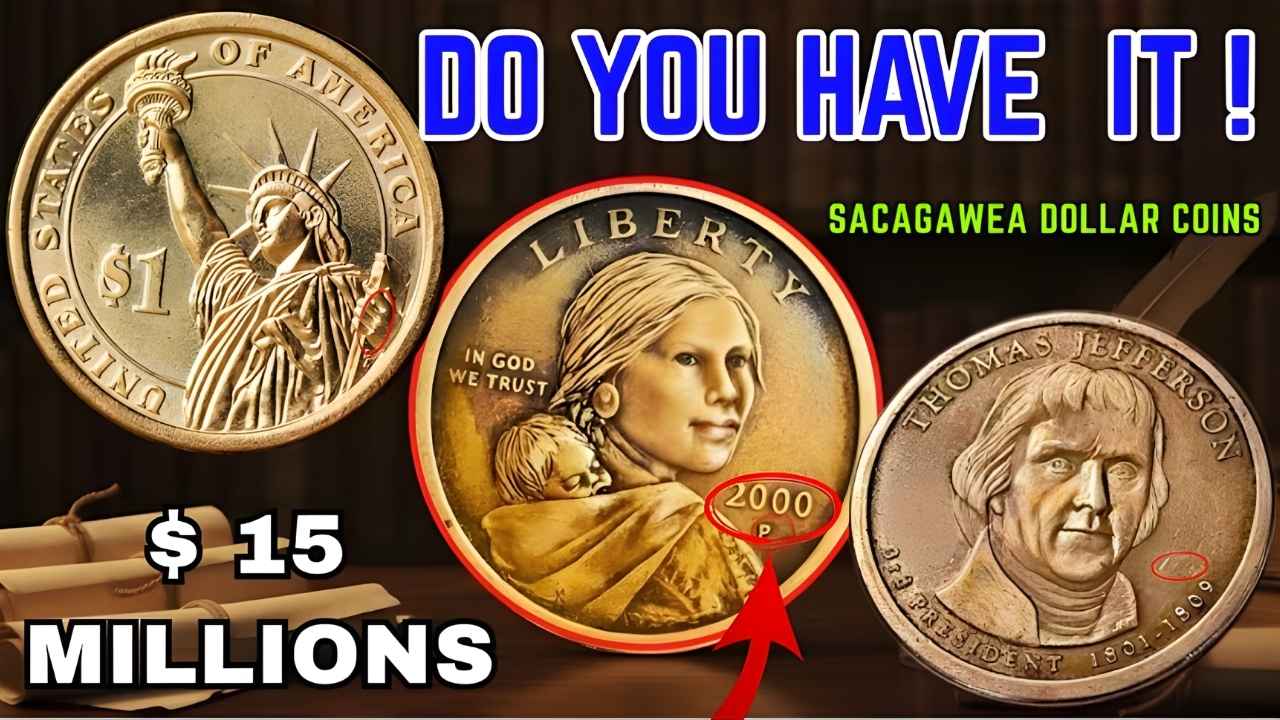
Sacagawea Dollar Value 2026: The Sacagawea Dollar is one of the most intriguing modern coins in American numismatics. First released in 2000, it was designed to honor Sacagawea, the Shoshone woman who played a vital role in guiding the Lewis and Clark expedition. Although intended for circulation, the coin never gained widespread use in everyday transactions. Instead, it became a collector’s item, admired for its golden color, distinctive design, and the many varieties and errors that make certain issues highly valuable in 2026.
The Design and Symbolism
The obverse of the coin features Sacagawea carrying her infant son, Jean Baptiste. This image symbolizes courage, guidance, and maternal strength. The reverse design has changed over the years, beginning with an eagle in flight and later evolving into the Native American Dollar series, which highlights contributions of Native Americans to United States history. The coin’s composition of copper with a manganese brass cladding gives it a golden appearance, though it is not made of precious metal.
Mint Marks and Their Importance
Mint marks are small letters on coins that indicate where they were produced. For the Sacagawea Dollar, the following mint marks are significant:
- P (Philadelphia) – The most common mint mark, widely available in circulation and collector sets.
- D (Denver) – Also common, but some years show slight differences in strike quality.
- S (San Francisco) – Proof coins struck for collectors, often more valuable due to limited mintage and superior finish.
Collectors pay close attention to mint marks because certain years and locations produced coins with lower mintages or unique characteristics that increase desirability.

Rare Errors That Command High Value
Error coins are among the most exciting finds for collectors. They occur when mistakes happen during the minting process, and they are usually scarce. Some of the most notable Sacagawea Dollar errors include:
- Double-strikes – Coins struck twice, resulting in overlapping designs.
- Off-center strikes – Misaligned designs that can range from minor shifts to dramatic misplacements.
- Wrong planchet errors – Coins struck on blanks intended for other denominations, such as quarters or nickels.
- Missing edge lettering (2009 onwards) – A rare mistake that adds significant collector value.
These errors can elevate a coin’s worth from a few dollars to hundreds or even thousands depending on rarity and demand.

Collector Grading Guide
Grading is the process of evaluating a coin’s condition, and it plays a crucial role in determining value. The main categories are:
- Circulated coins (Grades G–VF) – Usually worth face value unless an error is present.
- Uncirculated coins (MS60–MS70) – Higher grades command premiums, with MS70 being flawless and extremely rare.
- Proof coins (PR65–PR70) – Specially struck for collectors, often more valuable due to mirror-like finishes and limited production.
Professional grading services such as PCGS and NGC provide authentication and standardized grading, which greatly influences market value and buyer confidence.
Value Trends in 2026
The Sacagawea Dollar continues to attract collectors in 2026, with values varying widely depending on rarity, condition, and demand.
- Common circulation coins – Typically trade at $1 to $2.
- Proof and mint set coins – Range from $5 to $20 depending on grade.
- Rare errors and high-grade examples – Can reach $500 to $2,000 or more.
- Special editions (Native American series) – Often attract higher premiums due to unique reverse designs and limited mintages.
The market remains strong for rare varieties, especially error coins and pristine graded examples, making the Sacagawea Dollar a vibrant part of modern coin collecting.

Tips for Collectors
For those interested in building a collection, several strategies can help maximize value and enjoyment:
- Check mint marks carefully – Some years and locations are scarcer than others.
- Inspect for errors – Even small mistakes can add significant value.
- Invest in grading – Certified coins hold stronger resale value and provide assurance of authenticity.
- Store properly – Use coin holders or albums to prevent damage and preserve condition.
Patience and attention to detail are key, as rare finds often come from careful examination of coins that others overlook.

The Role of Sacagawea Dollars in Modern Numismatics
Although the Sacagawea Dollar never replaced the paper dollar in circulation, it has carved out a unique place in numismatic history. Its design honors Native American heritage, its errors provide excitement for collectors, and its proof issues showcase the artistry of the United States Mint. In 2026, the coin remains a symbol of history, culture, and collecting passion.
Conclusion
The Sacagawea Dollar is more than just a coin. It is a piece of American history, a tribute to a remarkable woman, and a collector’s treasure. While most examples remain close to face value, rare mint errors, proof issues, and high-grade specimens can command impressive premiums. For collectors, careful attention to mint marks, grading, and preservation ensures that these coins remain a rewarding pursuit well into 2026 and beyond.