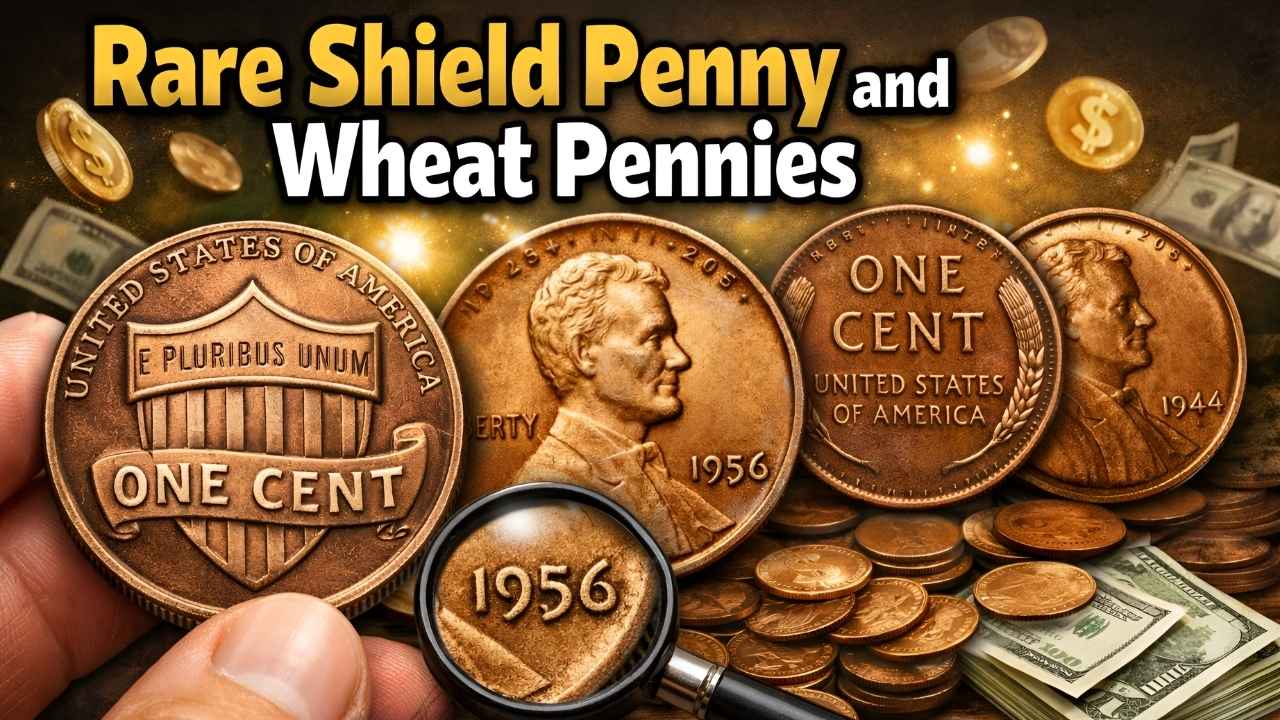
Rare Shield Penny and Wheat Pennies Value Guide: Old pennies are often ignored because of their small size and low face value. In Canada, however, certain one cent coins have become highly valuable collector items. Rare Shield pennies and select Wheat pennies can be worth hundreds or even thousands of dollars when the right conditions are met. These coins tell stories of early minting history, metal changes, and rare errors that continue to excite collectors across Canada and beyond.
Understanding the Canadian Shield Penny
The Shield penny is one of the earliest one cent coins connected to Canadian history. These coins date back to the mid nineteenth century, before Canada officially became a confederation. They are called Shield pennies because the reverse design features a shield with maple leaves, symbolizing unity and heritage.
Most Shield pennies were struck between 1858 and 1859. Because of their age and limited production, surviving examples are scarce. Many were heavily circulated, melted, or lost over time. Finding one today in good condition is already special. Finding one in excellent condition can be extremely valuable.
Why Shield Pennies Are So Valuable
The value of a Shield penny depends on several factors. Rarity is the biggest reason. Only a small number were produced compared to later Canadian cents. Condition also plays a major role. Coins with clear details, smooth surfaces, and original color are far more desirable.

Certain varieties are especially rare, including differences in lettering, date spacing, and design details. Collectors are willing to pay high prices for these subtle variations. Some Shield pennies in top condition have sold for thousands of dollars at auction.
The Role of Metal Composition in Value
Early Canadian Shield pennies were struck in bronze, which reacts strongly to the environment. Many surviving coins show corrosion, discoloration, or surface damage. Coins that avoided these problems are extremely rare.
Original red or reddish brown examples are especially valuable. Natural color shows that the coin has not been cleaned or altered. Once a coin is cleaned, much of its collector value is lost. Serious collectors strongly prefer original surfaces.
What Are Wheat Pennies and Why Canadians Collect Them
Wheat pennies are technically United States one cent coins minted between 1909 and 1958. They feature two wheat stalks on the reverse. Despite being American coins, Wheat pennies are commonly found in Canadian collections because of cross border circulation, trade, and travel.
Many Canadians unknowingly own Wheat pennies that entered circulation decades ago. While most Wheat pennies are common, some rare dates and error coins can be worth significant money even today.
Rare Wheat Pennies Worth Big Money in Canada
Certain Wheat pennies stand out as extremely valuable. Early dates with low mintages are especially prized. Coins struck during wartime years are also important because metal shortages and minting changes created rare varieties.
Error Wheat pennies are another major source of value. Off center strikes, doubled designs, and wrong metal compositions can turn an ordinary penny into a major collectible. In top condition, rare Wheat pennies have sold for thousands of dollars even in Canadian markets.
Condition and Grading Impact on Penny Values
Whether it is a Shield penny or a Wheat penny, condition is everything. Coins are graded based on wear, surface quality, and detail sharpness. A heavily worn coin may still have value, but a sharp well preserved coin can be worth many times more.
Mint State coins that show no wear are extremely rare for older pennies. These are the coins that attract serious collectors and command the highest prices. Even a small improvement in grade can result in a large increase in value.
Common Errors That Increase Value
Minting errors can dramatically increase the value of Canadian one cent coins. Double strikes, missing elements, and misaligned designs are highly collectible. Errors are especially valuable when they are easy to see without magnification.

Shield pennies with unusual die cracks or design variations are particularly interesting to collectors. Wheat pennies with doubled dates or letters are also in high demand. These errors are difficult to find and are often discovered by chance.
Mistakes That Can Destroy Penny Value
Many people unintentionally ruin valuable pennies. Cleaning is the most common mistake. Scrubbing or polishing a coin removes original surfaces and creates unnatural shine. This can reduce value by more than half.
Improper storage is another issue. Exposure to moisture, heat, and chemicals can cause long term damage. Coins should be stored in dry protective holders to preserve their condition and value.
How to Know If Your Canadian Penny Is Valuable
If you suspect that you own a rare Shield penny or a valuable Wheat penny, start by examining the date, design, and overall condition. Look for unusual features, errors, or strong detail.
Professional evaluation is highly recommended. A certified coin grading service can authenticate your coin and assign an official grade. Certification increases buyer confidence and often boosts resale value.
Are Canadian One Cent Coins a Good Investment
Canadian one cent coins continue to gain interest as the penny is no longer in circulation. This adds historical importance and scarcity. Rare examples with strong condition have shown steady appreciation over time.
While not every penny will be valuable, truly rare Shield pennies and key date Wheat pennies remain solid long term collectibles. Knowledge and patience are essential for success.
Final Thoughts on Shield and Wheat Pennies
Shield pennies represent the foundation of Canadian coinage, while Wheat pennies reflect a shared North American monetary history. Together, they offer collectors a unique opportunity to own small but powerful pieces of the past.
A single cent coin may seem insignificant, but in the world of numismatics, it can be worth thousands of dollars. With careful study and proper preservation, these tiny coins can hold enormous historical and financial value.