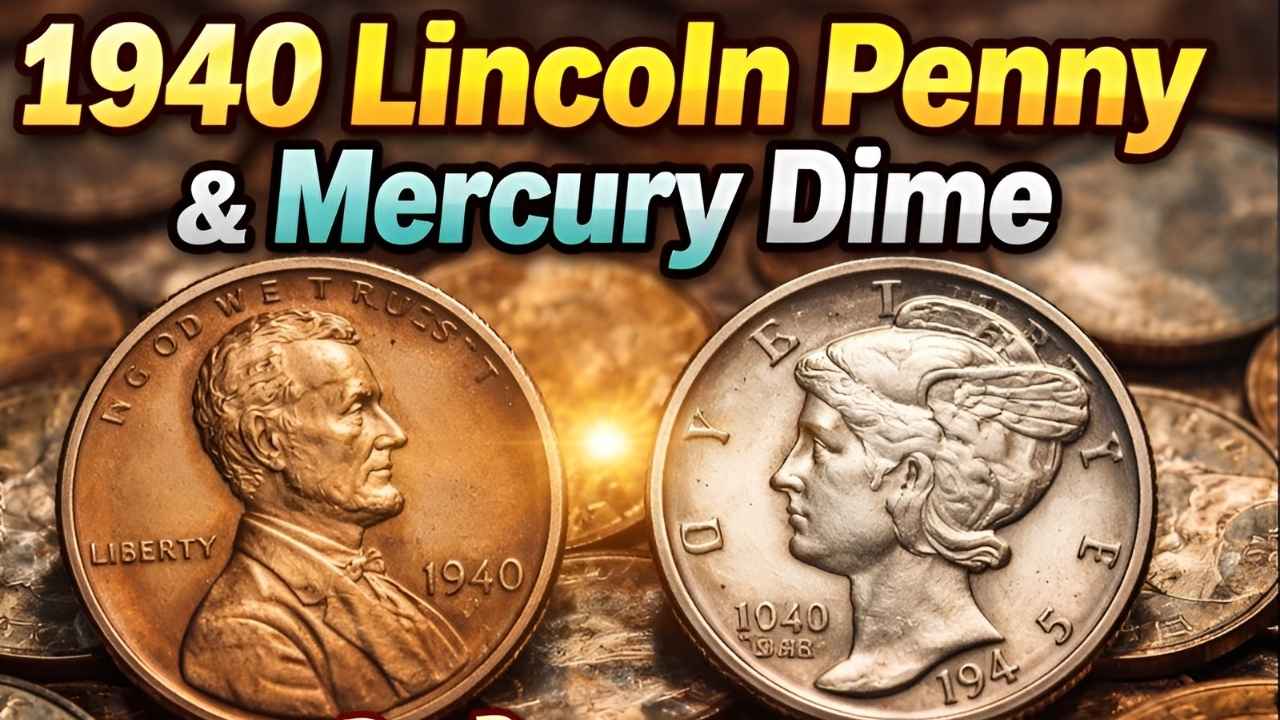
1940 Lincoln Penny and Mercury Dime: The world of coin collecting is filled with fascinating stories, historical connections, and hidden treasures. Among the most intriguing coins for collectors are the 1940 Lincoln Penny and the 1940 Mercury Dime. These coins were minted during a time of global uncertainty, just before the United States entered World War II. While they may appear ordinary at first glance, certain varieties, mint errors, and high-grade examples have made them rare treasures worth significant amounts of money. In 2026, collectors continue to seek these coins not only for their financial value but also for their historical importance.
The 1940 Lincoln Penny
The Lincoln Penny, first introduced in 1909, was already a familiar coin by 1940. Struck in bronze, the 1940 issue is generally common, but rare mint errors and high-grade examples make it highly collectible. The obverse features Abraham Lincoln’s portrait, while the reverse displays two wheat stalks, giving it the nickname “Wheat Penny.”

Key Varieties of the 1940 Lincoln Penny
Several varieties of the 1940 Lincoln Penny stand out to collectors:
- Proof coins produced in Philadelphia are rare and highly sought after.
- Mint errors such as doubled dies, clipped planchets, or off-center strikes add uniqueness.
- High-grade circulated examples with minimal wear can still fetch strong prices.
In 2026, pristine proof examples and rare errors are valued in the thousands, making them standout pieces in any Lincoln Penny collection.

The 1940 Mercury Dime
The Mercury Dime, officially called the Winged Liberty Head Dime, was designed by Adolph A. Weinman and minted between 1916 and 1945. The 1940 issue is common in circulated condition, but rare varieties and high-grade examples are highly prized. Collectors admire the artistry of the design, which symbolizes freedom of thought, and the coin’s silver composition adds intrinsic value.
Key Varieties of the 1940 Mercury Dime
Collectors look for several important varieties of the 1940 Mercury Dime:

- The 1940-D Mercury Dime minted in Denver is scarcer than the Philadelphia issue.
- Full Bands varieties, where the horizontal bands on the reverse fasces are fully struck, are especially valuable.
- Proof Mercury Dimes from 1940 are rare and command high prices.
In 2026, Full Bands examples and proof coins continue to attract strong demand, with values reaching into the thousands depending on condition.
Historical Context
The year 1940 was marked by global turmoil as World War II raged in Europe. Although the United States had not yet entered the war, coinage from this period reflects the stability of American industry and design. Collectors often view coins from 1940 as symbolic of a nation on the brink of transformation, adding historical depth to their value.

Why These Coins Are Valuable
The value of the 1940 Lincoln Penny and Mercury Dime comes from a combination of rarity, condition, and historical significance. Coins with low mintages or striking errors are especially prized. Collectors also appreciate the artistry of the designs, which are considered among the most beautiful in American coinage.
Collector Tips for 1940 Coins
- Examine coins carefully for mint marks and strike quality.
- Look for errors such as doubled dies or off-center strikes.
- Seek Full Bands Mercury Dimes for maximum value.
- Preserve coins in protective holders to maintain condition.
- Use professional grading services to confirm authenticity and grade.
Investment Potential
Both the 1940 Lincoln Penny and Mercury Dime are not only collectibles but also investments. Their values have consistently risen over time, especially for rare varieties. While the market can fluctuate, owning these coins is often seen as holding a piece of American history. In 2026, investors continue to view them as both financial assets and cultural treasures.

Preservation and Care
To maintain value, coins must be preserved carefully. Collectors avoid cleaning coins, as this can damage surfaces and reduce value. Proper storage in climate-controlled environments and professional encapsulation ensure coins remain secure and protected for generations.
Conclusion
The 1940 Lincoln Penny and Mercury Dime are more than just coins. They are rare treasures that connect collectors to a pivotal moment in history. From proof issues to mint errors, these coins have captivated numismatists for decades. In 2026, they remain symbols of rarity, artistry, and resilience. For anyone lucky enough to discover one, the reward is not only financial but also a deeper connection to America’s past.