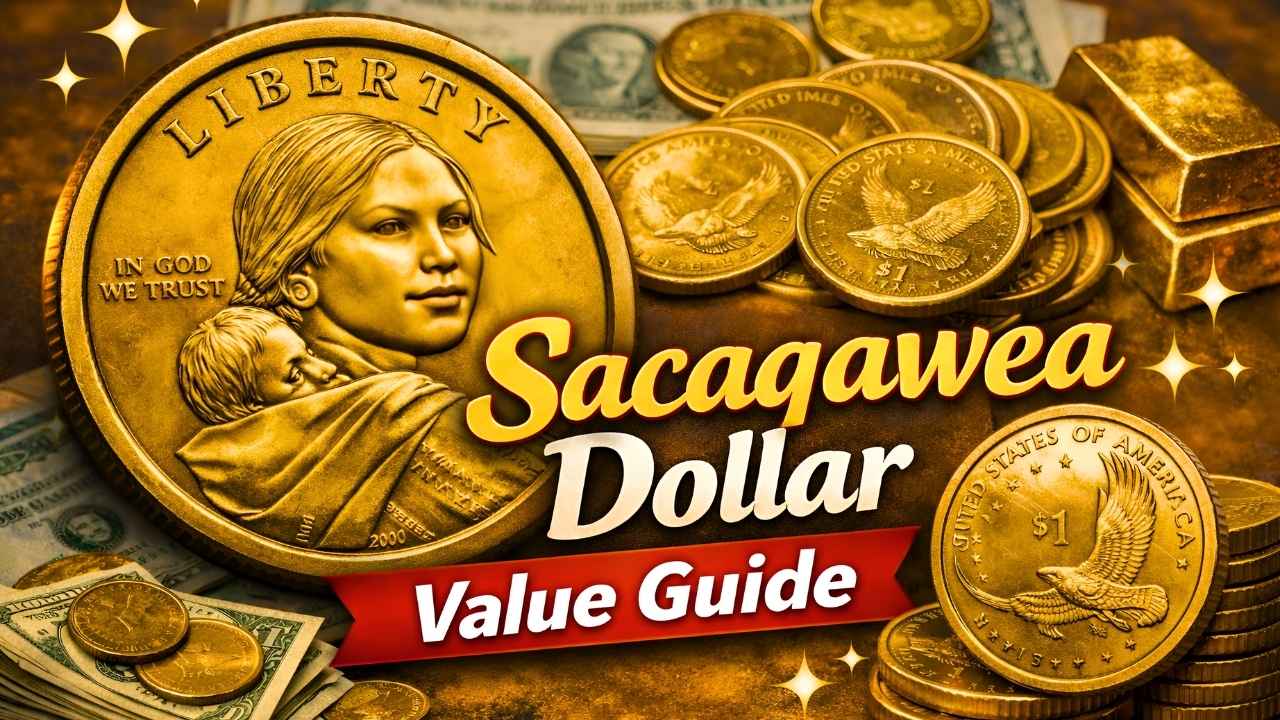
2026 Sacagawea Dollar Value Guide: The Sacagawea dollar is one of the most fascinating modern coins in American numismatics. First introduced in 2000, it was designed to honor Sacagawea, the Shoshone woman who guided Lewis and Clark during their legendary expedition. The coin features her portrait on the obverse and a soaring eagle on the reverse in its earliest years, later replaced by rotating Native American themes. Collectors have long admired the coin for its golden color, unique design, and historical significance.
By 2026, the Sacagawea dollar has become more than just a circulating coin. It is a collectible piece of history, with certain varieties commanding impressive premiums. Among these, the rare no date coins stand out as intriguing errors that spark curiosity and excitement among collectors.

Understanding the 2026 Sacagawea Dollar
The 2026 issue continues the tradition of the Native American dollar program, showcasing designs that highlight the contributions of Indigenous peoples to the history of the United States. Like previous years, the coin is struck in a manganese brass composition that gives it a golden hue. While the face value remains one dollar, its collectible value often exceeds this amount depending on rarity, condition, and demand.
Collectors pay close attention to mint marks, strike quality, and any unusual features. The 2026 Sacagawea dollar is no exception, with enthusiasts searching for varieties and errors that can elevate its worth far beyond its nominal value.

The Mystery of No Date Sacagawea Dollars
One of the most captivating aspects of coin collecting is the discovery of minting errors. A no date Sacagawea dollar is exactly what it sounds like: a coin missing the date inscription. Since the date is a critical element of any coin, its absence transforms the piece into a rarity.
No date errors can occur for several reasons. Sometimes the coin blank fails to receive a complete strike, leaving off essential details. In other cases, a die may be improperly prepared or damaged, resulting in missing inscriptions. Whatever the cause, such coins are highly prized because they represent anomalies in the minting process.

For the 2026 Sacagawea dollar, reports of no date varieties have already attracted attention. Collectors are eager to identify genuine examples and distinguish them from coins that have been altered or damaged after leaving the mint.
Identifying a Genuine No Date Coin
Spotting a true no date Sacagawea dollar requires careful examination. Collectors should look for the following indicators:
- The coin should otherwise appear normal, with clear design elements and consistent strike quality.
- The missing date should not show signs of tampering, such as scratches or abrasions that suggest removal.
- The surface around the missing date area should match the rest of the coin in texture and color.
- Professional grading services can provide authentication, ensuring that the coin is a legitimate mint error rather than a post-mint alteration.
Because counterfeiters sometimes attempt to create fake rarities, authentication is essential. A certified no date Sacagawea dollar carries far more credibility and value than one without professional verification.
Collector Value and Market Trends
The value of a 2026 Sacagawea dollar depends on several factors. Common circulation strikes may only be worth face value, but coins in pristine condition can fetch a premium. Proof versions, struck with special dies and sold to collectors, often command higher prices.
No date errors are in a different category altogether. Depending on demand and rarity, such coins can sell for hundreds or even thousands of dollars. The exact value is influenced by:
- Condition: Coins with minimal wear are more desirable.
- Certification: Graded and authenticated coins carry higher premiums.
- Market demand: Collector interest in error coins fluctuates, but rare varieties tend to hold long-term value.
- Historical significance: Errors from notable years or with unique characteristics often attract more attention.
In 2026, the market for Sacagawea dollars remains strong, with collectors appreciating both standard issues and unusual varieties. The no date coins represent a niche but highly sought-after segment of this market.

Tips for Collectors Seeking No Date Sacagawea Dollars
For those hoping to add a rare no date coin to their collection, patience and diligence are key. Here are some practical tips:
- Examine rolls of dollar coins from banks, as errors sometimes slip into circulation.
- Attend coin shows and auctions, where rare varieties are more likely to appear.
- Network with other collectors who may have leads on unusual finds.
- Consider purchasing certified examples to avoid the risk of counterfeits.
- Stay informed about market trends and error reports, as new discoveries can influence values.
Collecting is as much about the thrill of the hunt as it is about the coins themselves. The possibility of uncovering a rare no date Sacagawea dollar adds excitement to the hobby.

Historical Context of Error Coins
Error coins have fascinated collectors for centuries. From double strikes to off-center issues, these anomalies provide insight into the minting process and highlight the human and mechanical factors involved in coin production.
The Sacagawea dollar has its own history of notable errors. In 2000, the famous Cheerios dollar featured a prototype reverse design distributed in cereal boxes, now worth thousands of dollars. Other varieties include missing edge lettering and unusual die clashes. The 2026 no date coin fits into this tradition, offering collectors another chapter in the ongoing story of minting quirks.
The Role of Professional Grading
Professional grading services play a crucial role in the coin market. By evaluating condition, authenticity, and error status, they provide collectors with confidence in their purchases. A coin graded by a reputable service carries a numerical grade that reflects its state of preservation, from heavily worn to flawless.
For no date Sacagawea dollars, grading is especially important. Authentication ensures that the coin is a genuine mint error rather than a manipulated piece. Collectors should consider submitting potential finds to grading services to maximize value and credibility.
Collector Insights and Future Outlook
The Sacagawea dollar continues to evolve as a collectible series. Each year brings new designs and opportunities for discovery. The 2026 issue, with its potential no date errors, adds intrigue to the series and reinforces the importance of careful examination.
Collectors who specialize in modern dollars often view error coins as highlights of their collections. The rarity and uniqueness of these pieces make them conversation starters and prized possessions. Looking ahead, the market for Sacagawea dollars is likely to remain vibrant, with error coins maintaining strong demand.
Conclusion
The 2026 Sacagawea dollar represents both continuity and novelty in American coinage. While the series continues to honor Native American heritage, the emergence of rare no date coins adds a layer of excitement for collectors. Identifying and authenticating these errors requires skill and caution, but the rewards can be substantial.
For enthusiasts, the pursuit of a no date Sacagawea dollar is more than a quest for value. It is a journey into the fascinating world of numismatics, where history, artistry, and chance converge. Whether discovered in circulation or acquired through auctions, these coins remind us that even in modern minting, surprises still await those who look closely.